Artificial intelligence is transforming industries at an unprecedented pace—and architecture is no exception. From automated feasibility studies to AI-generated design options, new tools are changing how projects begin and how quickly they move. For many architects, this raises a critical leadership question: what is our role in an AI-driven world?
The answer is simple but powerful: AI will not replace architects. Instead, it will empower them to do what they do best—lead with vision, creativity, and human insight.
The Evolution of Tools
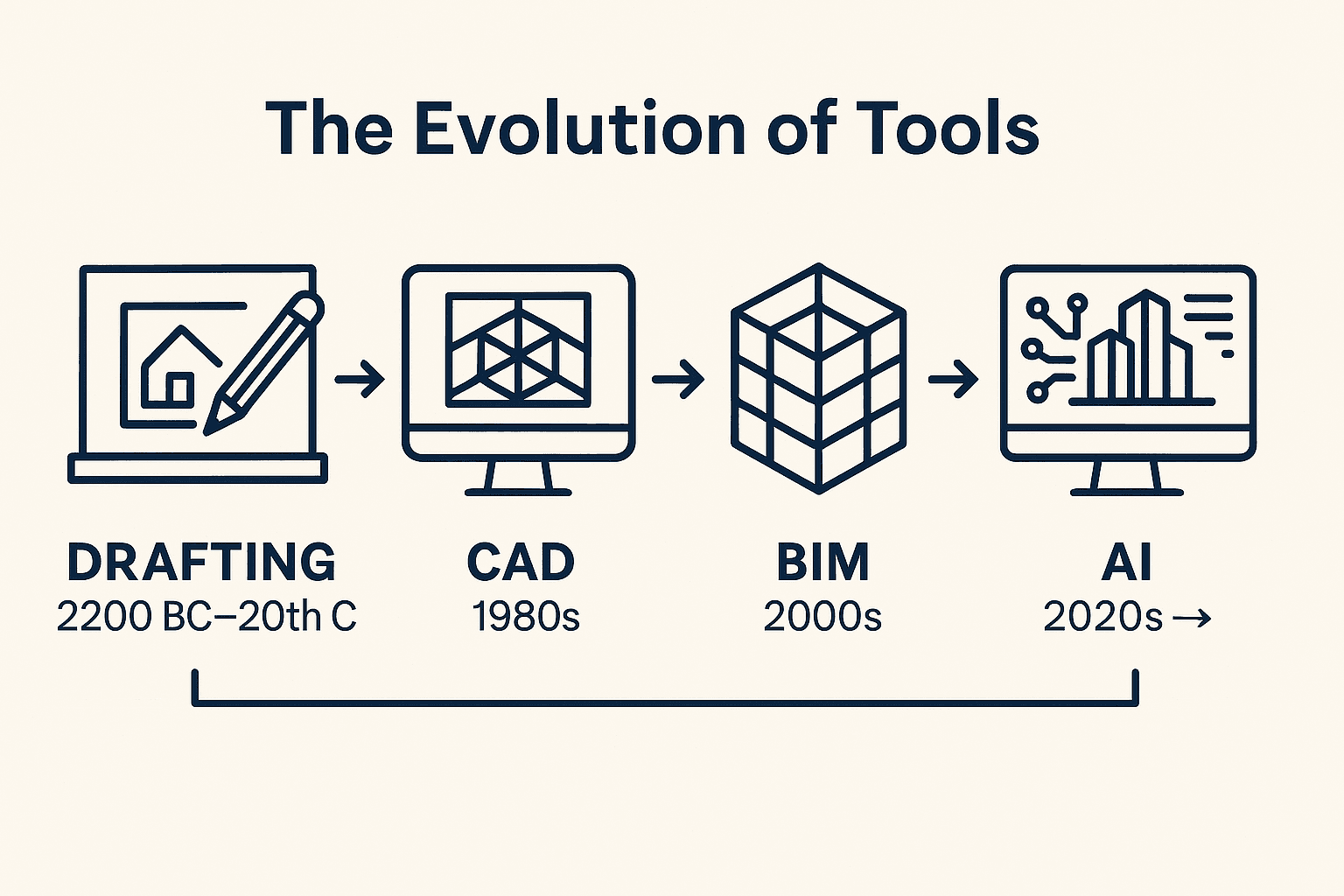
Architecture has always been shaped by evolving tools. The drafting board gave way to CAD, which transformed precision and speed in drawing. At the time, many feared CAD would erode the artistry of hand-drawing—but instead, it became a staple that freed up architects to iterate faster and deliver clearer documentation.
Then came BIM, which was more than just a drawing tool. BIM changed the very process of collaboration by embedding data into every element of a model. Suddenly, architects weren't just producing drawings—they were coordinating with engineers, contractors, and owners in real time. What seemed disruptive at first soon became an industry standard, elevating the role of architects within the project team.
AI should be seen through the same lens. Just as CAD automated drafting and BIM automated coordination, AI is now automating feasibility. It takes on repetitive zoning checks, density studies, and financial testing, creating space for architects to focus on creativity and leadership.
Creativity Remains Human

What AI cannot replace is the uniquely human ability to interpret culture, community, and context. An algorithm may generate building forms, but it cannot imagine how a street corner feels at dusk, or how a home should breathe life into a neighborhood. Architects remain the storytellers of the built environment, giving meaning to data and shaping spaces that people connect with on an emotional level.
This is where leadership comes into play: framing AI not as an intruder, but as a collaborator. By clearing away the most mechanical parts of design, AI allows architects to explore more options, test new ideas, and ultimately deliver more thoughtful solutions.
Leading Teams Through Change
Every technological transition creates uncertainty. Teams may wonder whether efficiency comes at the cost of artistry, or whether automation will undermine their role. These moments demand strong leadership.
The firms that thrive will be those where leaders encourage experimentation, pilot new workflows, and celebrate quick wins. A feasibility study that once took weeks can now be done in hours, giving teams more time for design iterations. When architects see how AI expands their ability to experiment and refine, they recognize that technology is there to support—not replace—their expertise.
A Stronger Seat at the Table
Perhaps the most exciting change is how AI expands the role of architects in the broader development process. With instant access to feasibility and financial insight, architects can step beyond being service providers and claim their place as strategic partners.
This new position allows them to enter conversations with developers, investors, and city officials armed with both creative vision and hard data. Architects can help lead discussions on viability, density, and design potential, instead of reacting to them after the fact. The result is a stronger, more influential voice in shaping the future of cities.
Embracing Leadership in the AI Era
The AI era doesn't diminish the role of architects—it elevates it. By embracing new tools, architects can strengthen their creative impact, guide their teams with confidence, and step into a more strategic role within the development process.
At Zenerate, we believe this future is already here. AI-powered feasibility is giving architects more room to lead with vision while reducing bottlenecks at the very start of every project. The leaders who recognize this shift today will be the ones shaping tomorrow's built environment.
Explore What Zenerate Can Do
Ready to accelerate your feasibility studies? Book a demo with us today and get a free trial to see how fast site planning can be done.
Book a demo + Get a Free Trial