For real estate developers, land acquisition depends on speed, clarity, and confidence.
Before a site can move forward, teams need to understand what the land can realistically support. How many units can fit? How much parking is possible? What is the total built area? Which density scenario creates the strongest opportunity?
For Construtora Tenda, one of Brazil’s largest real estate developers and a leading affordable housing builder, answering those questions quickly is essential to evaluating land opportunities and supporting live negotiations.
After testing several platforms, Tenda adopted Zenerate to bring AI-supported massing studies into its land acquisition process. One year later, the team is using Zenerate to test development capacity, compare density scenarios, and move land deals forward with greater speed and confidence.
.png&w=3840&q=75)
The results:
• 30 minutes per massing study, down from 4 hours
• 8× faster compared with the previous manual process
• 6+ studies per day sustained after one year of use
About Construtora Tenda
Construtora Tenda is one of Brazil’s largest real estate developers and the country’s leading homebuilder in the entry tier of the federal Minha Casa, Minha Vida program, which serves families earning up to two minimum wages.
Tenda operates as a full-service homebuilder, managing land acquisition, project development, construction, marketing, and sales in-house. Its industrialized construction model allows the company to deliver compact, high-quality apartments in gated communities at accessible price points across metropolitan regions nationwide.
Because land acquisition is central to Tenda’s development strategy, the team needs a fast and reliable way to evaluate site potential before moving forward with negotiations.
The Challenge: Massing Studies Were Too Slow for Live Land Negotiations
Every land acquisition starts with one core question:
How many units can be built on this site?
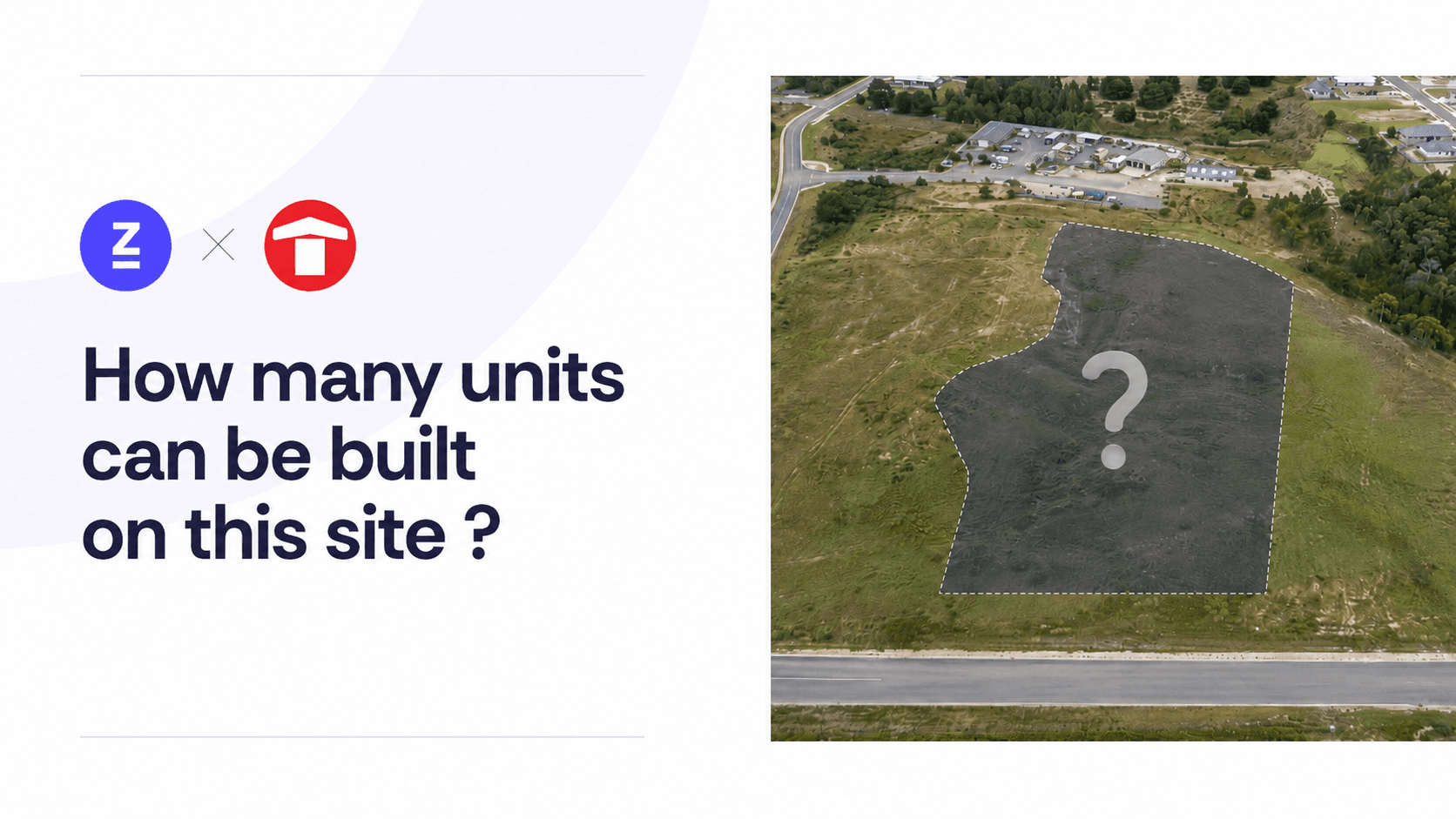
Answering that question requires more than a rough estimate. Tenda’s team needs to understand development capacity across multiple variables, including unit count, density, parking requirements, total built area, tower placement, and site organization.
One answer is rarely enough. Land acquisition decisions often depend on comparing several scenarios against each other to understand which option creates the best density, layout, and development opportunity.
Before using Zenerate, creating each design solution manually took Tenda at least 4 hours. That timing made it difficult to move as quickly as land negotiations often require.
As Tenda shared:
“Zenerate App has allowed us to create multiple scenarios at once, making it easier for our designer to quickly understand which scenario yields the best density for us. Additionally, with the 3D and rendering tools, we were able to present these studies in a much more engaging way to the landowners.”
For a team evaluating acquisition opportunities, this ability to quickly compare scenarios is critical. A massing study is not only a design exercise. It is a decision-making tool that helps determine which sites are worth pursuing and how clearly their development potential can be communicated.
The Solution: A 30-Minute Massing Study Workflow
With Zenerate, Tenda’s massing study workflow became significantly faster.
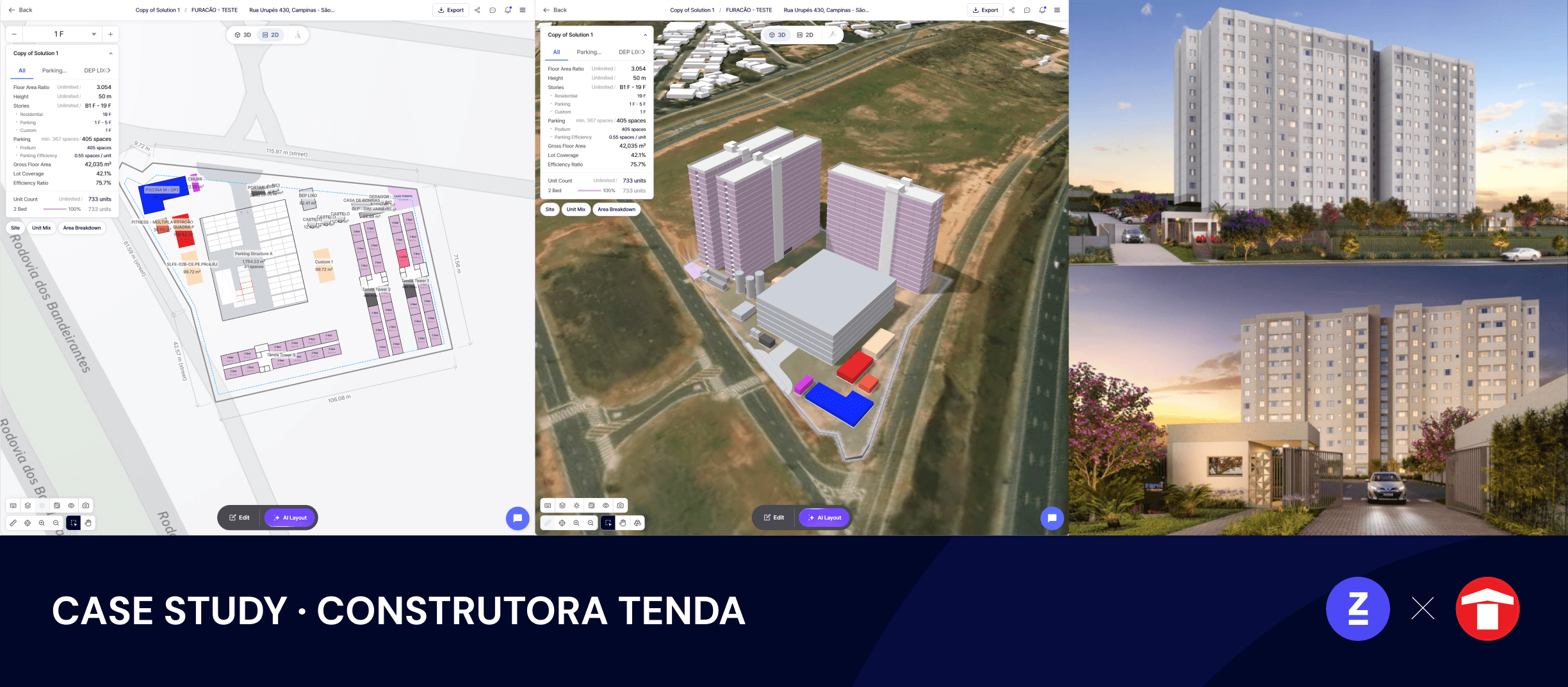
The team begins by adding the site polygon and inputting the site’s zoning information. From there, they can define tower placement, test parking layouts, include parking spaces or parking garage options, and add remaining towers or amenity buildings as needed.
This allows the team to move from basic site setup to a complete massing study much faster than before.
Tenda explained:
“The entire creation process takes about 30 minutes. Previously, doing this manually would take us at least 4 hours to generate each design solution. We have all the outputs for the number of units, parking spaces, and built area. Right there in the study.”
By reducing each massing study from 4 hours to 30 minutes, Tenda’s team can test more sites, compare more scenarios, and respond to acquisition conversations with stronger information.
Instead of waiting hours for a single manually drafted option, the team can quickly generate multiple development scenarios and review key feasibility outputs directly inside the study.
The Result: 8× Faster Studies and More Scenarios Per Day
After one year of using Zenerate in production, Tenda’s team consistently creates at least six massing studies per day.
This speed has changed how the team approaches early land evaluation. Faster massing studies mean faster site comparisons, faster internal review, and more agility during negotiations.
Tenda summarized the impact clearly:
“After one year of use, we have found that we can create at least 6 studies per day, bringing agility to site negotiations.”
Throughput is only one part of the value. Because unit count, parking capacity, and built area are included directly in the study, Tenda’s team can walk into acquisition conversations with clearer numbers and stronger visual materials.
That matters when communicating with landowners, internal stakeholders, and decision-makers. A faster study is useful, but a faster study with clear outputs, editable scenarios, and visual presentation tools is much more powerful.
Key Benefits for Tenda
For Tenda, Zenerate brought several important benefits to the massing study and land acquisition workflow.
Rapid Visualization of Multiple Scenarios
Zenerate allows Tenda’s team to create and compare multiple development scenarios quickly. This makes it easier to understand how different site planning decisions affect density, tower placement, parking, and overall development capacity.
Flexible Customization for Local Regulations
Because local requirements can affect how a site is planned, Tenda values the ability to customize studies and adapt layouts based on local regulations. This flexibility helps the team respond to site-specific constraints while still moving quickly.
Building and Unit Library
Tenda also identified the ability to create a building and unit library as a key benefit. Reusable data helps the team work more efficiently across studies and supports a more consistent workflow.
3D Visualization and Rendering Capabilities
Beyond technical feasibility outputs, Zenerate’s 3D and rendering tools help Tenda present studies in a more engaging way. This is especially useful when communicating site potential to landowners or supporting internal decision-making.
As Diego Crenitte, Head of BIM Department at Construtora Tenda, shared:
“Zenerate has transformed the way we develop our massing studies. What used to take days, we now deliver in a matter of hours, bringing much more agility and scale to our land acquisition process.”
Why Tenda Chose Zenerate
Before adopting Zenerate, Tenda tested several platforms. In comparison with similar tools, the team identified seven areas where Zenerate stood out.
1. Usability and Fast Onboarding
Tenda found the platform practical and fluid, allowing even first-time users to learn it quickly. This was important because land acquisition workflows require speed, not long onboarding periods.
2. Flexible Editing
The team valued that generated studies are not static. After a study is created, users can continue editing and adapting the layout as needed.
3. Reusable Library
Tenda identified Zenerate’s built-in library as a major differentiator. The ability to store and reuse data helps the team work more efficiently across different studies.
4. Customer Support
Tenda highlighted Zenerate’s support as outstanding, noting that the team receives fast and precise assistance whenever an issue comes up.
5. Flexible Exports
The ability to export directly from the platform into other file formats was another important advantage. This helps the team move feasibility outputs into other workflows as needed.
6. Financial Pro Forma
Tenda also values the ability to align costs directly with initial studies. Connecting massing studies with financial inputs helps support more complete early-stage analysis.
7. Speed and Reliability
Finally, speed and reliability were major factors. According to Tenda, some other platforms they tested lagged or crashed frequently, while Zenerate allowed the team to work quickly and consistently.
Agility Built Into Land Acquisition
For Tenda, the core value of a massing study is its ability to support land acquisition decisions.
The team needs to understand which sites are worth pursuing, compare density scenarios, and communicate development potential clearly enough to advance negotiations. By turning a 4-hour manual task into a 30-minute editable workflow, Zenerate has helped Tenda bring more agility and scale to that process.
The impact is not only faster production. It is faster decision-making.
With Zenerate, Tenda can evaluate more sites, compare more options, and support negotiations with clearer numbers and stronger visuals. For a high-volume affordable housing developer, that speed creates a meaningful advantage.
Final Thoughts
Construtora Tenda adopted Zenerate to improve the speed and quality of its massing study workflow during land acquisition.
One year later, the team is creating massing studies 8× faster, reducing study time from 4 hours to 30 minutes, and consistently producing at least six studies per day.
By combining rapid scenario generation, editable layouts, clear feasibility outputs, reusable libraries, 3D visualization, rendering tools, flexible exports, and financial pro forma capabilities, Zenerate helps Tenda move from site evaluation to acquisition conversations with greater confidence.
For developers evaluating land opportunities, speed matters. The faster a team can understand what a site can support, the faster they can decide whether the opportunity is worth pursuing.
Explore What Zenerate Can Do
If you would like to discuss how Zenerate could support your feasibility or land development workflow, book a demo below to start the conversation.
Book a Demo + Start a Free Trial