For Vivmark Residential, the company formed through the merger of equals between AvalonBay Communities and Equity Residential in 2026, evaluating a development opportunity means understanding how the site, building types, and operational needs work together. Unit count and parking ratios are part of that assessment, alongside construction type, density, and the residential product that best fits the location.
Using Zenerate, Vivmark brings more of this early multifamily site feasibility work in-house. The team can test its preferred units, compare development scenarios, and establish a clearer direction before engaging outside design consultants.
About Vivmark Residential
Vivmark Residential is a residential REIT focused on creating long-term value through the acquisition, development, ownership, and management of multifamily communities. The company currently owns and operates over 600 communities, containing more than 184,000 apartment homes.
Its work combines institutional investment discipline with experience in residential operations, design, and development. Evaluating new opportunities therefore requires a view of both development potential and how a community will function long-term once occupied.
Bringing Early Site Feasibility Analysis In-House
Vivmark uses Zenerate during the early stages of evaluating new residential development opportunities. The team examines whether key project factors—including unit count, parking ratios, building type, and construction type—can come together in a viable project.
Previously, working through these questions involved days of back-and-forth with design consultants. Vivmark reports that it can now complete this early evaluation internally in a single afternoon.
That gives the team an opportunity to explore alternatives and assess trade-offs before commissioning more refined design work. Outside consultants remain part of the process, with Vivmark bringing a more developed understanding of the site and preferred product mix to those conversations.
Testing Preferred Units Across Different Building Types
Vivmark regularly works with standardized unit types. An important part of its site planning process is understanding how those units fit within a particular parcel and development concept.
With Zenerate, the team uses a library of its preferred unit and building types to evaluate potential layouts. Working with familiar components increases its confidence that the concepts being explored will align with Vivmark’s standards and expectations.
The team compares different residential product types, including:
• Mid-rise developments
• Garden-style communities
• Townhome developments
• Wrap developments
These comparisons help Vivmark assess the relationships between density, project metrics, and construction costs. Rather than committing to a building type at the outset, the team can explore how different approaches respond to the same development opportunity.

Finding the Right Product Mix for a Site
Some opportunities call for more than one residential product type.
Vivmark often evaluates combinations of building types on a single site. Zenerate helps the team explore where each type should sit to improve site efficiency and achieve the desired density.
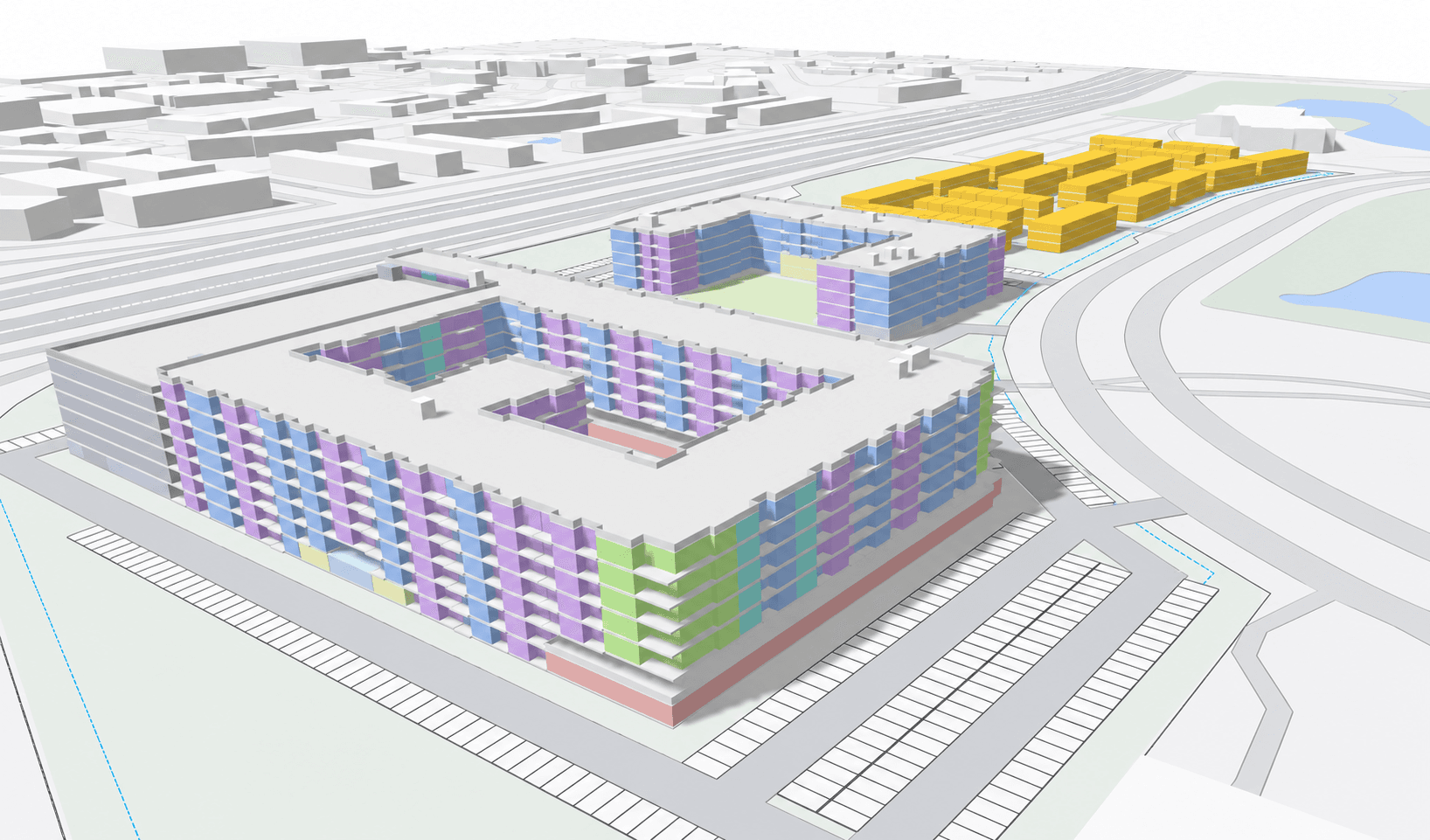
This makes product selection and building placement part of the same evaluation. The team can compare scenarios and determine which combination warrants further development before bringing in an outside design consultant.
For Vivmark, the value lies in reaching that next stage with a clearer direction: a product mix that has already been tested against the site and the team’s project objectives.
Including Day-to-Day Operations in Site Planning
Vivmark’s early evaluations also consider how a future community will operate.
Alongside building placement and development density, the team examines:
• Site access
• Guest parking
• Waste collection
• Resident loading
These considerations affect both the performance of the site and its relationship with neighboring properties. Incorporating them into early site feasibility analysis helps Vivmark assess a concept beyond its headline unit count.
Zenerate supports this internal review by giving the team a way to explore how operational needs interact with the proposed layout. Those findings then inform the direction taken into more detailed design.
Communicating a Clearer Development Direction
The benefits extend beyond the team conducting the initial site study.
According to Vivmark, Zenerate’s outputs support clear and concise communication between its design, development, construction, investment, and consultant teams. The scenarios give those groups a shared basis for discussing the opportunity and the trade-offs involved.
Vivmark identifies three key benefits from using Zenerate:
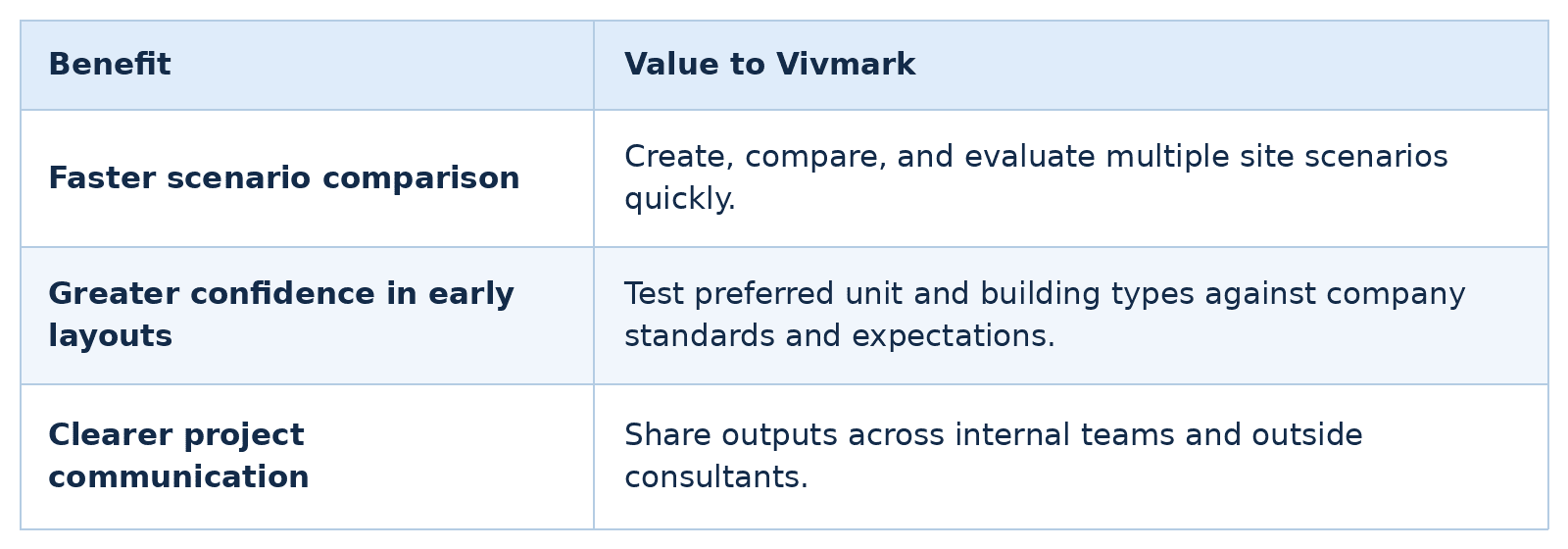
By evaluating alternatives internally, Vivmark can identify a preferred approach before asking consultants to develop more refined solutions. Early site planning becomes a practical step toward a better-defined design brief.
Explore What Zenerate Can Do
Zenerate helps development teams explore site scenarios, test building configurations, and compare project metrics during early feasibility.
Vivmark’s experience shows how that process can support in-house evaluation while giving design consultants a clearer starting point for the next stage of work.
Explore Zenerate to see how it can support your next multifamily development opportunity.
Book a Demo + Start a Free Trial