Every development team has heard them.
“Parking should be fine.”
“The zoning looks straightforward.”
“The site looks flat enough.”
“Let’s just add more units.”
In real estate feasibility, these are often the sentences that come right before the project gets more complicated.
At the beginning of a site evaluation, it is easy to make quick assumptions. A parcel may look clean. A layout may seem simple. A unit count may feel achievable. Then the team starts testing setbacks, parking, access, grading, unit mix, circulation, and zoning requirements together, and the site begins to reveal its real personality.
That is why a strong real estate feasibility study matters. It turns first impressions into tested scenarios and helps developers understand what can realistically work before too much time, capital, or design effort is committed.
Here are a few famous last words developers, architects, and feasibility teams may recognize.
“Parking Should Be Fine.”
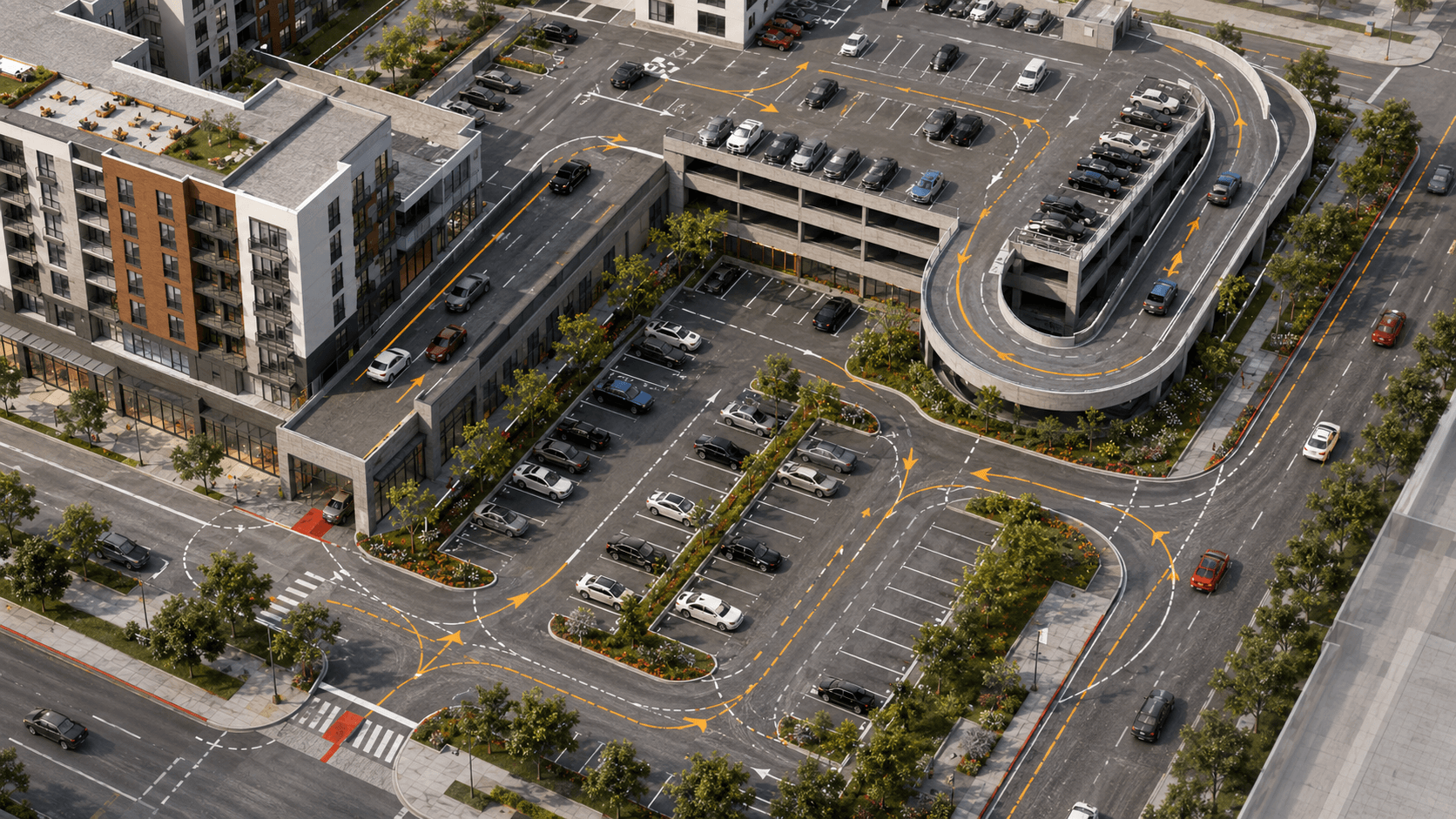
Parking is rarely “fine” for very long.
A building may fit on the site, the unit count may look reasonable, and the overall massing may seem promising. Then the parking requirement enters the conversation.
Suddenly, the layout needs to account for stall counts, drive aisles, turning radius, ramps, entrances, exits, circulation, and sometimes podium or structured parking. A design that looked strong from a density perspective may need to be adjusted once parking is tested properly.
During a site feasibility analysis, parking can affect far more than the parking plan itself. It can influence building placement, unit count, floor plate efficiency, construction cost, and overall project feasibility.
This is why parking should be tested early, not treated as something that will somehow work itself out later.
“The Zoning Looks Straightforward.”
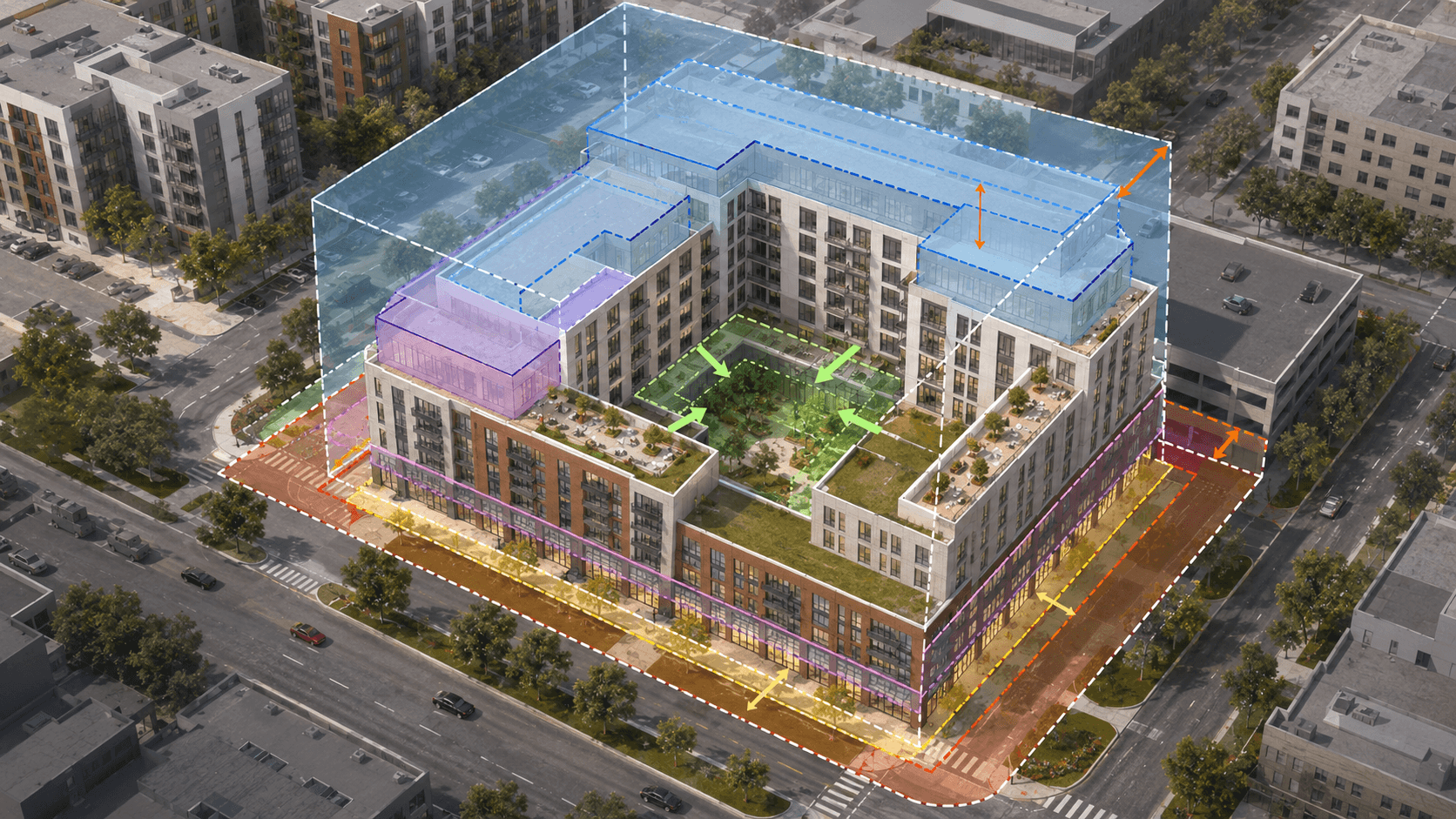
Sometimes zoning really is straightforward.
Other times, the basic zoning district is only the beginning.
A site may have overlay requirements, specific plan conditions, density limits, height restrictions, open space requirements, parking standards, frontage rules, or design guidelines that change what can actually be built. A parcel can look simple on paper, but the details may create constraints that affect the entire test fit.
This is especially important during a development feasibility study because zoning assumptions often shape the first version of the project. If those assumptions are wrong or incomplete, the design may need to be revised later.
A zoning summary is helpful, but it is not the same as understanding how zoning affects the layout. The real question is not only what the code allows. It is how those rules interact with the site, the building, and the project goals.
“The Site Looks Flat Enough.”
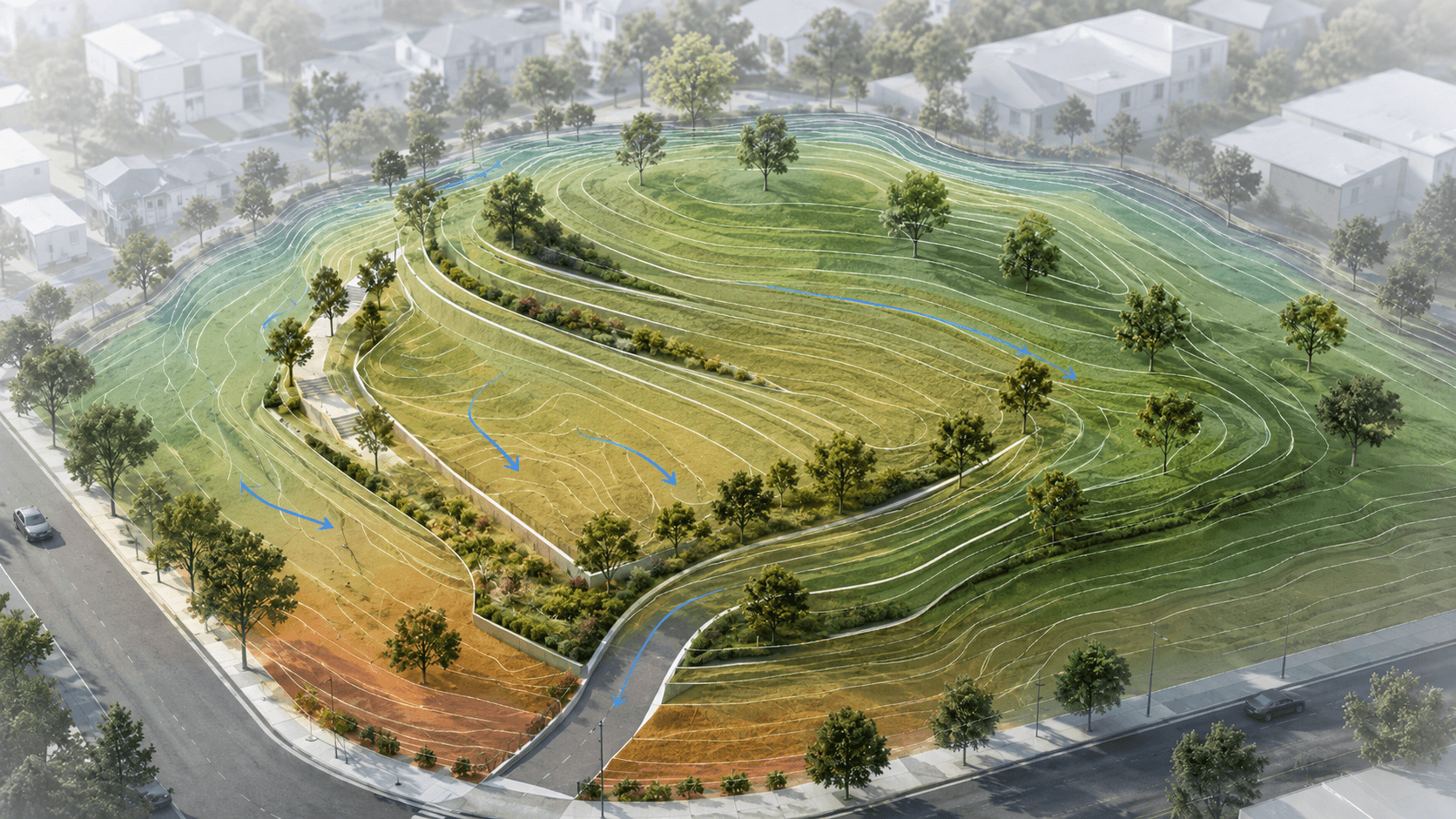
It looked flat online.
Then the team reviewed the topography.
Even small changes in elevation can influence the design. Slope can affect grading, access, drainage, parking, building entrances, podium conditions, retaining walls, and construction cost. A site does not need to be dramatically steep to create feasibility challenges.
For land development, this is one of the easiest issues to underestimate early. A slope that looks manageable from a map or aerial view may become more important once the building and circulation are placed on the site.
During early site feasibility analysis, topography should be reviewed before the design direction becomes too fixed. The goal is not to avoid every sloped site. The goal is to understand how the slope affects the project before it becomes an expensive surprise.
“Let’s Just Add More Units.”
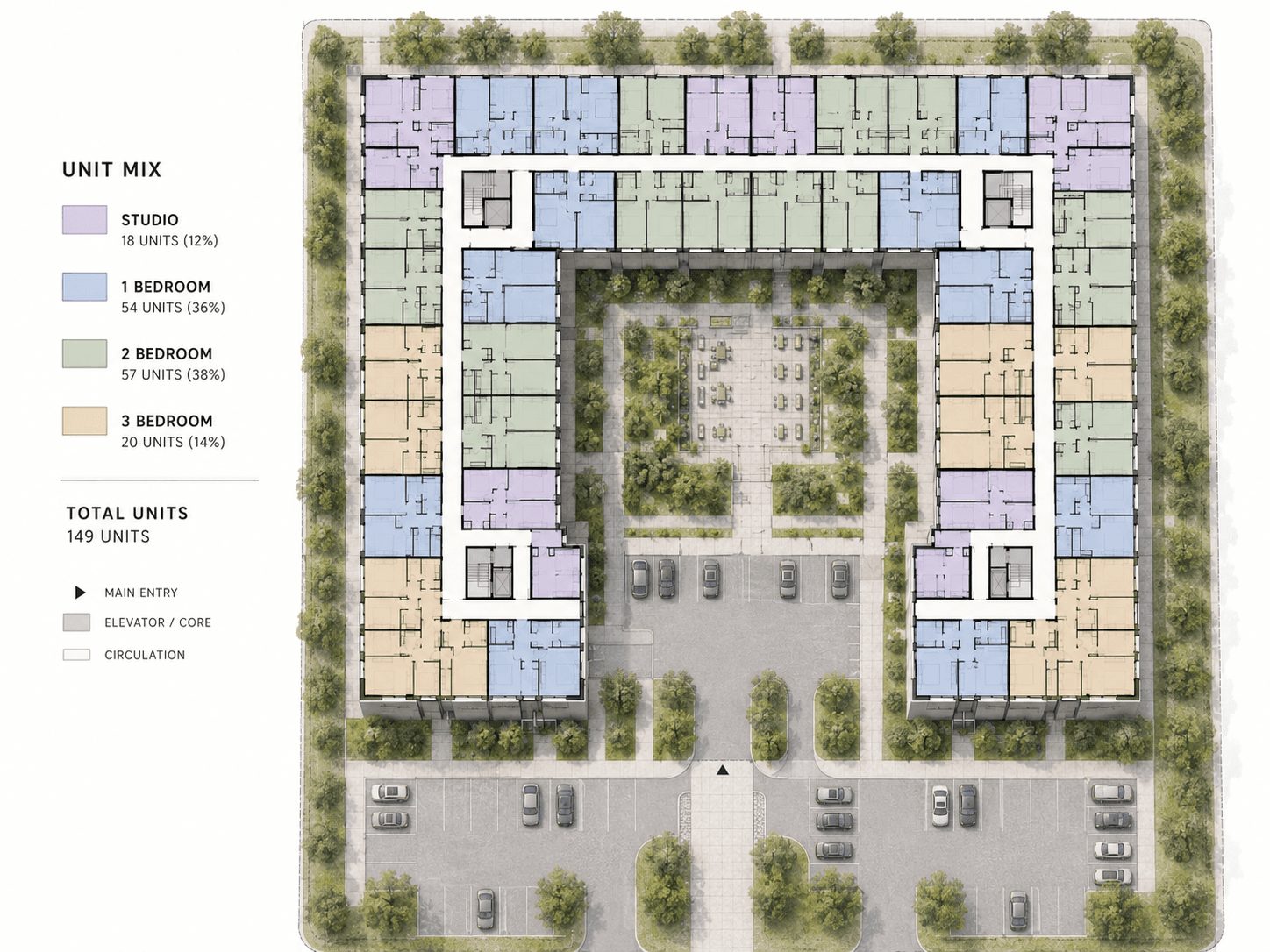
More units can improve a project’s revenue potential, but only if the rest of the site can support them.
Adding units may affect parking demand, circulation, open space, floor plate efficiency, building depth, corridor logic, unit mix, and construction cost. A higher unit count does not automatically create a stronger project if the layout becomes inefficient or unrealistic.
This is where test fit modeling becomes important. Instead of assuming that more density is always better, teams can compare multiple scenarios and understand the trade-offs.
A strong real estate feasibility study should help answer questions like:
Can the site support the additional units?
Does the parking still work?
Is the unit mix still marketable?
Does the building layout remain efficient?
Does the added density improve the project, or does it create new problems?
In feasibility, more is only better when the full project still works.
“We Can Fix It Later.”
This sentence has caused many problems.
Some issues can be refined later. Others become harder, more expensive, or more disruptive once the project has already moved forward.
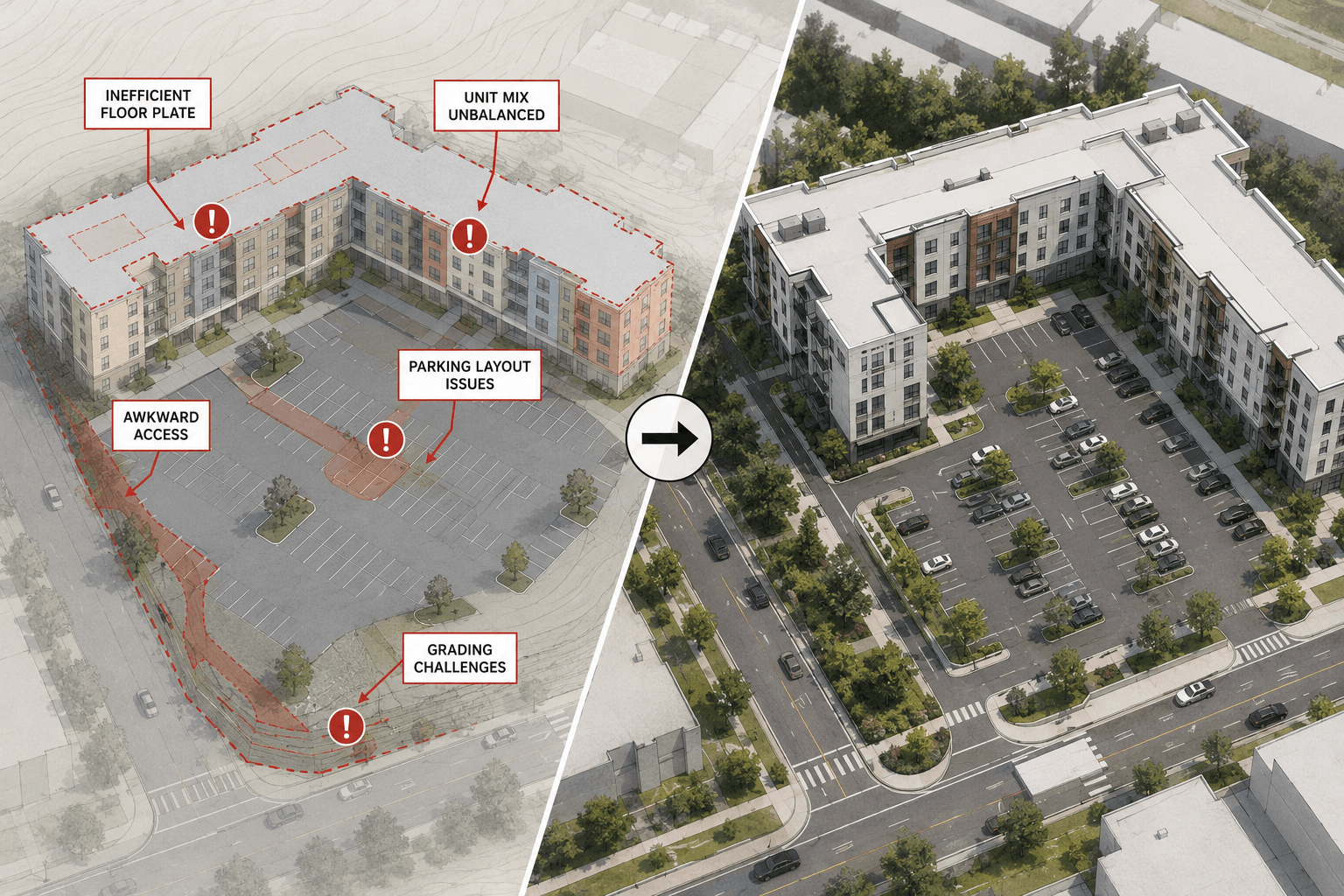
Parking layout issues, awkward access, inefficient floor plates, unrealistic unit mix assumptions, setback conflicts, and grading challenges are usually easier to address during early feasibility than later design phases.
A development feasibility study exists to catch these issues while the project is still flexible. At that stage, teams can test alternatives, compare options, and make changes before everyone becomes attached to one layout.
“Later” is not always a strategy. Sometimes it is just a delay.
“The Lot Shape Is Fine.”
Rectangular sites are generous.
Irregular sites are less forgiving.
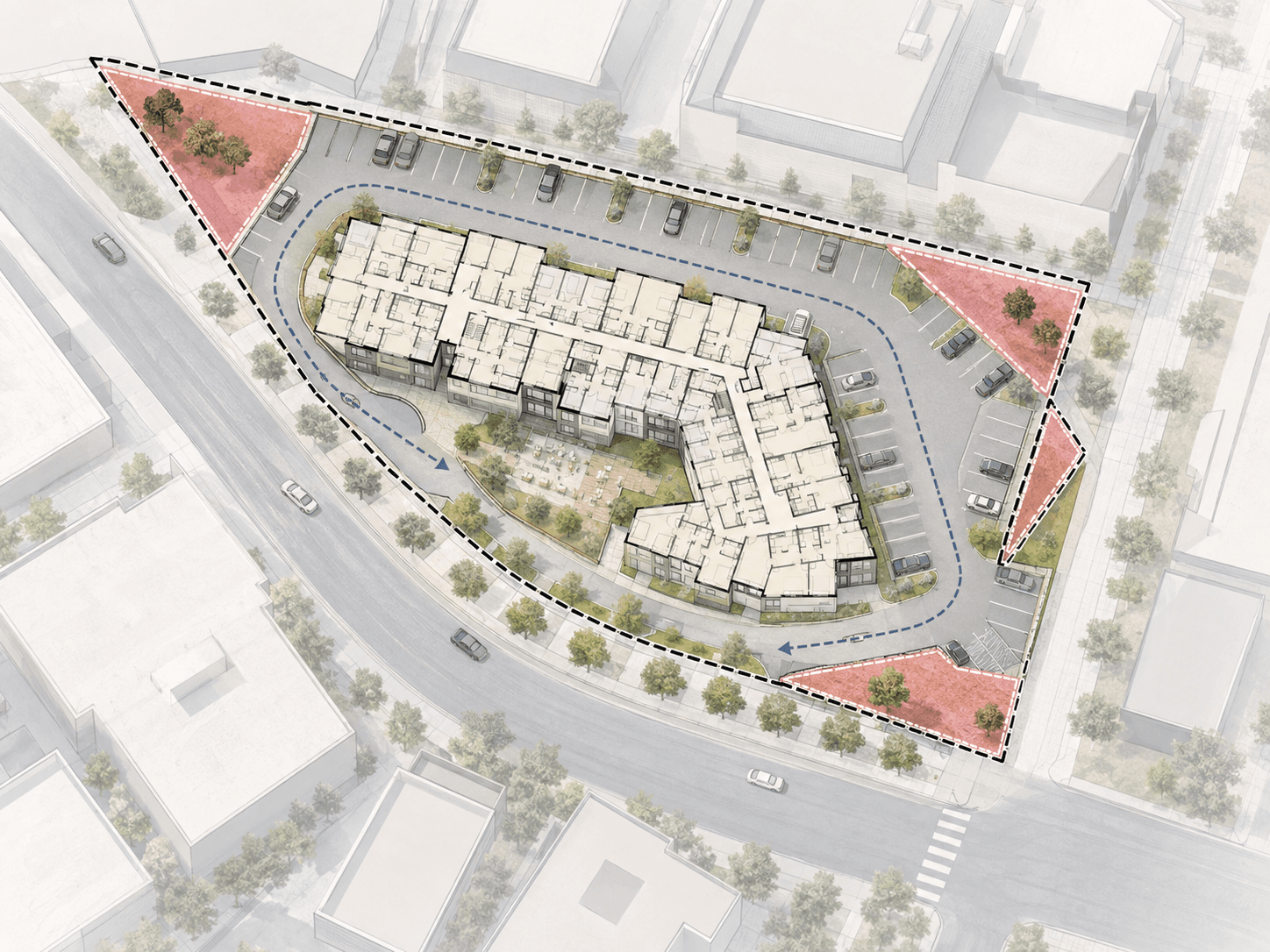
Angled property lines, curved frontages, narrow corners, unusual parcel shapes, and non-standard street edges can all affect the building layout. The site may still work, but it may require more iteration than expected.
A lot shape that seems minor at first can influence building orientation, leftover open space, circulation, parking efficiency, and unit layout. This is especially true when the project depends on maximizing density or fitting a specific building type.
During a real estate feasibility study, the lot shape should be tested through actual layout scenarios rather than judged by appearance alone. A site can look large enough and still be difficult to use efficiently.
“One Option Should Be Enough.”
One option can show that something fits.
It does not always show whether it is the best option.
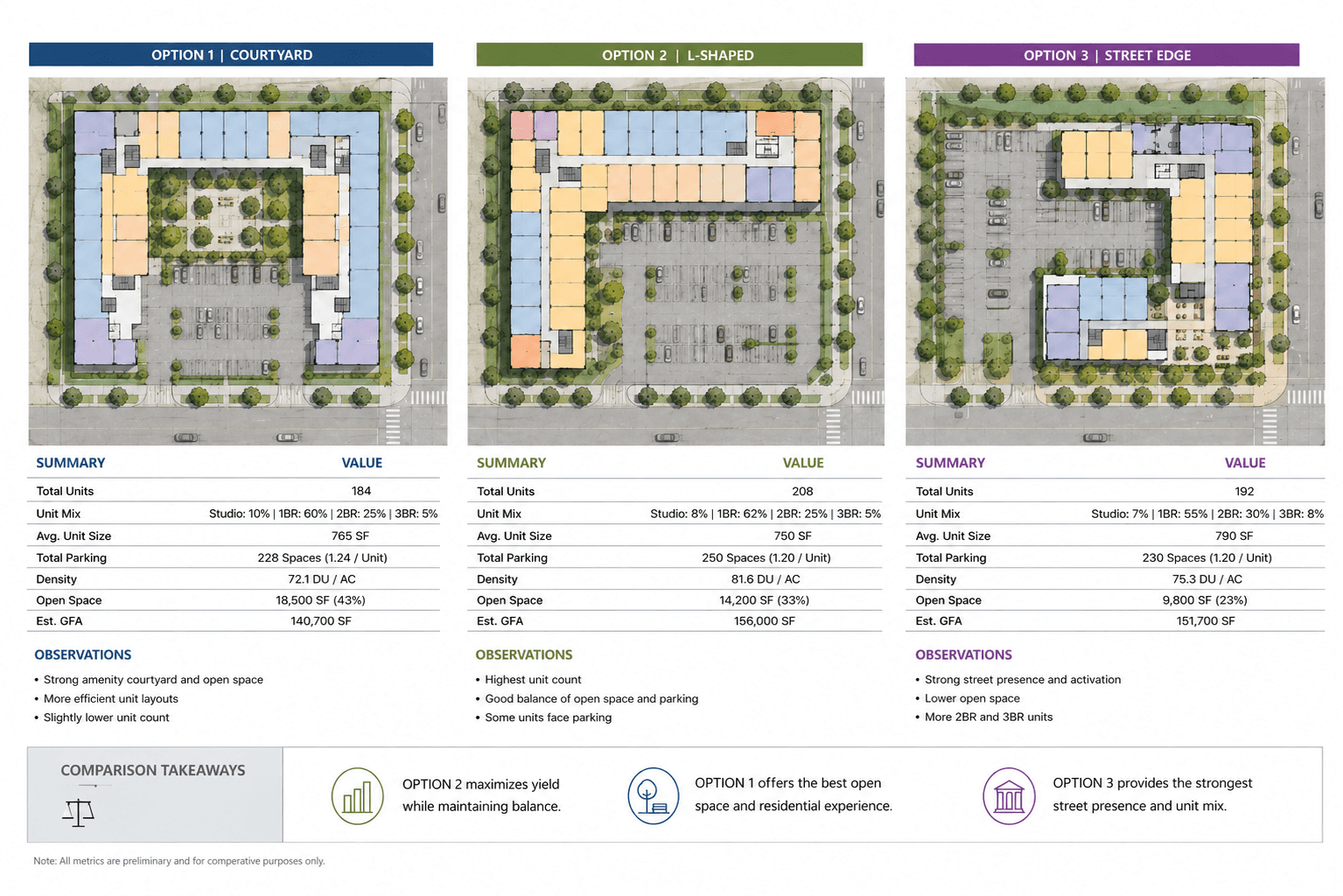
In early land development, small design changes can create very different outcomes. A shift in building placement may improve parking. A different unit mix may improve efficiency. A revised massing strategy may increase yield or reduce construction complexity.
That is why scenario comparison matters. A single test fit gives one answer. Multiple test fits reveal trade-offs.
The strongest feasibility workflow is not about producing as many options as possible for the sake of it. It is about testing enough options to understand which direction is most realistic, efficient, and aligned with the development goals.
“This Should Be Simple.”
Sometimes it is.
Most of the time, it is simple until the details arrive.
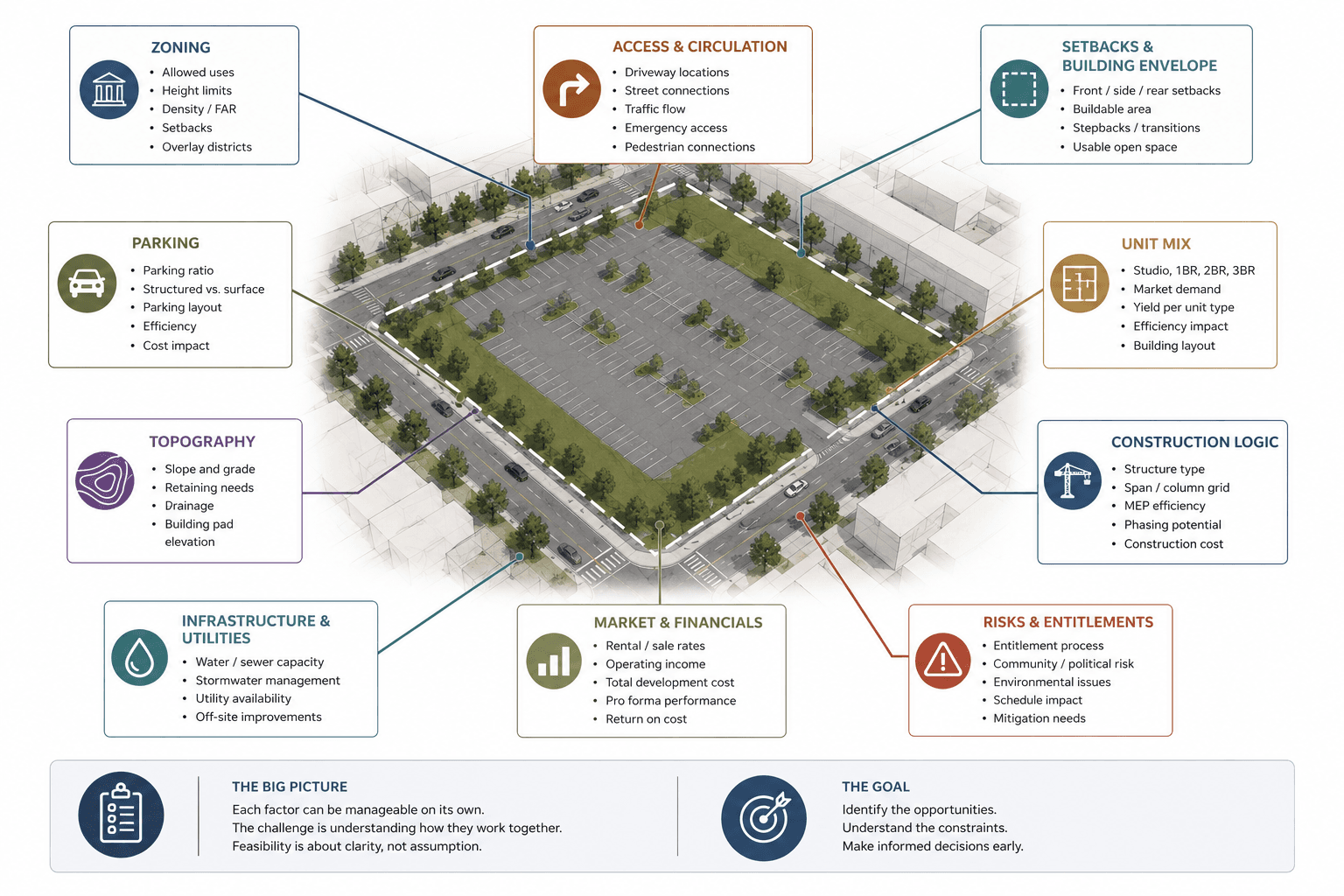
A site may begin with a clean parcel boundary and a promising location, but feasibility depends on how many conditions work together. Zoning, parking, access, setbacks, unit mix, topography, construction logic, and financial assumptions all influence the final outcome.
This is why early optimism needs to be tested. A site can still be a strong opportunity, but the team needs to understand what makes it strong and what could make it difficult.
A good site feasibility analysis does not remove every challenge. It makes those challenges visible earlier.
Final Thoughts
Every development project begins with assumptions.
Some are reasonable. Some are optimistic. Some become famous last words.
“Parking should be fine.”
“The zoning looks straightforward.”
“The site looks flat enough.”
“We can fix it later.”
The purpose of a real estate feasibility study is to test those assumptions before they become expensive decisions. By using test fit modeling, scenario comparison, and structured site feasibility analysis, developers and architects can better understand what a site can realistically support.
In land development, the goal is not just to prove that something can fit.
It is to understand whether the project actually works.
Explore What Zenerate Can Do
If you would like to discuss how Zenerate could support your feasibility or land development workflow, book a demo below to start the conversation.