Early-stage feasibility often stalls long before design even begins. Not because the project is unusually complex, but because familiar workflow patterns repeat themselves: a missed zoning detail here, a spreadsheet error there, a rush for "one more option" at the last minute.
They appear so consistently that they could qualify as the seven deadly sins of feasibility. Let's take a closer look at each one and how Zenerate's AI can remove the pain behind them.
1. Optimistic Gluttony
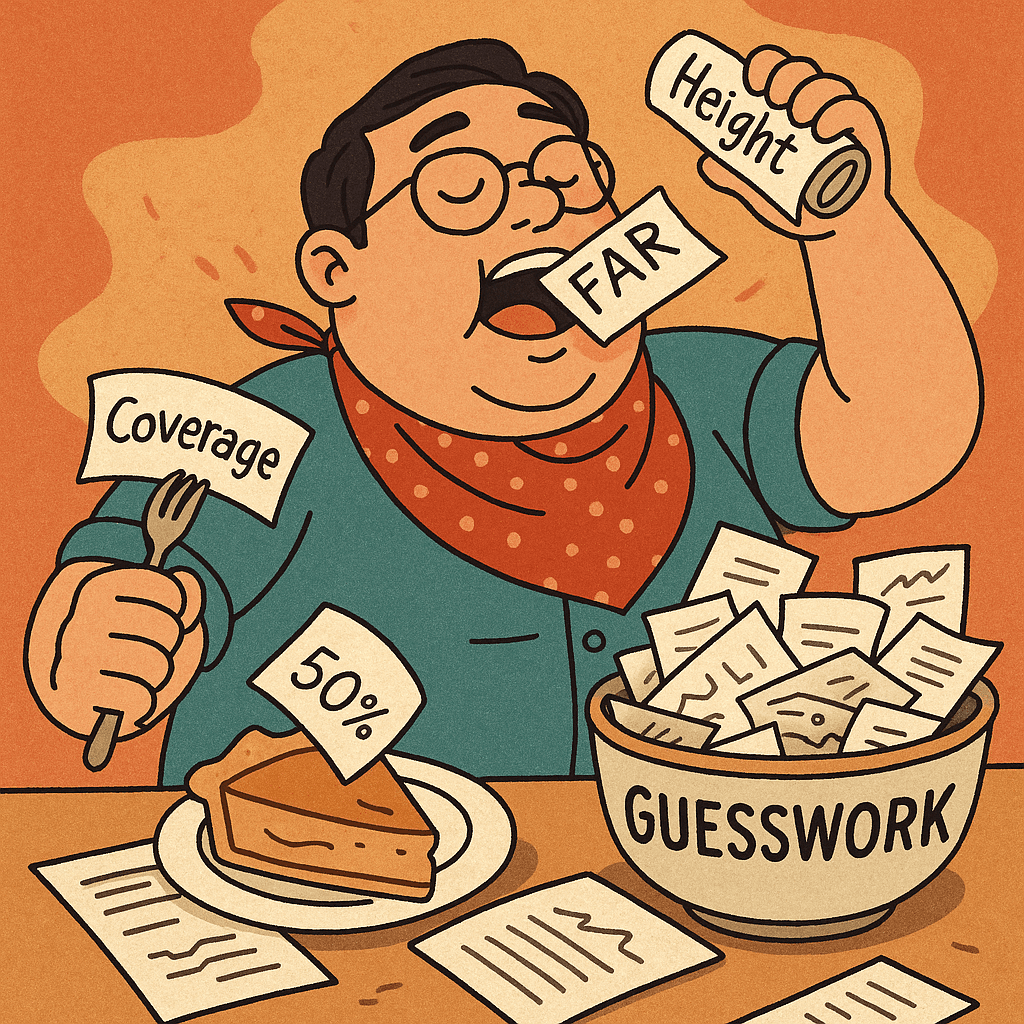
The temptation is strong:
"The pro forma works if we assume rents can reach around $4,000, the market should move by the time we open."
"Demand will be strong here; absorption should be faster than the comps."
"Construction costs might ease next year, so the budget will probably hold."
"Parking ratios are trending downward citywide, so we can likely plan for fewer stalls."
These aren't careless assumptions. They're the optimistic projections teams often make to keep a project alive in early stages, especially when speed, client pressure, or competitive timing are at stake.
But… when optimism runs ahead of validated constraints, small misalignments can balloon into value-engineering cycles, redesigns, and delayed approvals.
Zenerate's resolution:
Optimism is valuable—it keeps teams moving, but feasibility requires an anchor. Zenerate preserves the creative momentum while grounding decisions in real zoning data. Once inputs are added, the platform automatically generates layouts and massings that satisfy verified constraints, showing both the optimistic path forward and the conservative realities.
2. Spreadsheet Sloth
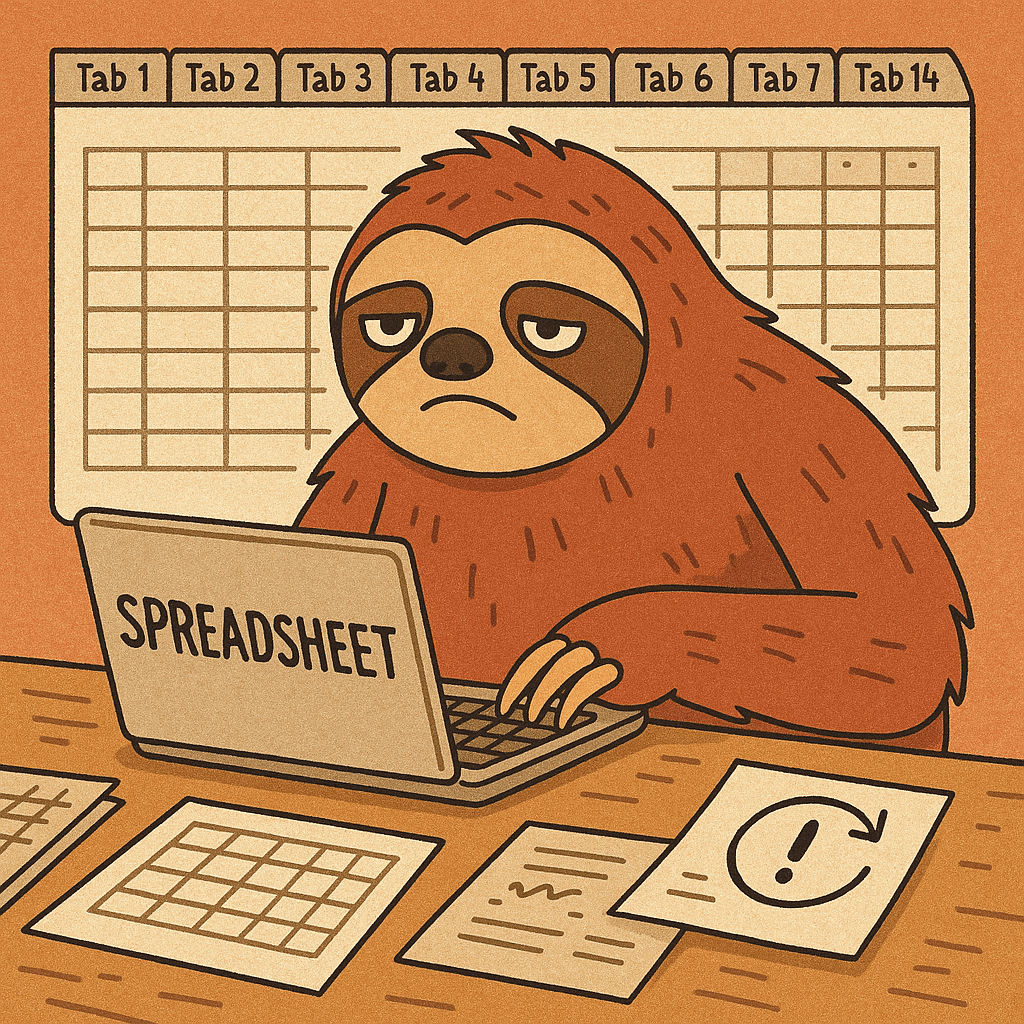
Spreadsheets seem like the fastest way to start feasibility. Then they grow:
• 6 tabs → 14 tabs
• Linked formulas → circular errors
• No one remembers the original source of the numbers
What started as a simple study becomes a fragile structure that breaks when the next change arrives.
Zenerate's resolution:
Area, program, and yield metrics generate automatically and update instantly as layouts shift.
3. Iteration Envy
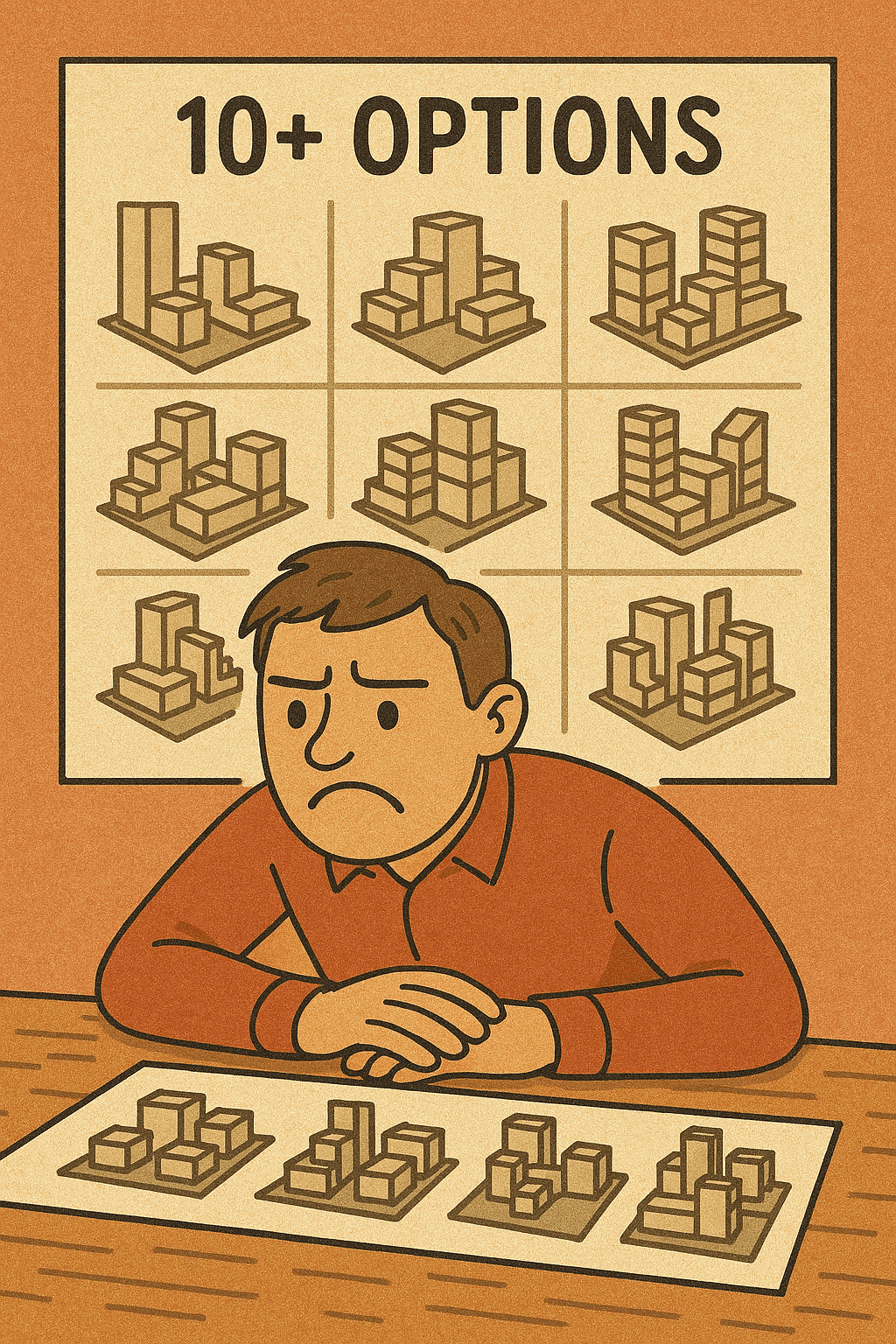
Most teams manually produce one or two concept options, limiting how much they can explore impacts on the pro forma.
Competitive teams, however, evaluate many variations—different unit mixes, different massing approaches, different yield assumptions—to see which combinations improve financial performance.
Manual workflows make it almost impossible to explore that many paths.
Zenerate's resolution:
Generative engines produce a broad set of viable scenarios instantly, giving teams not just more options, but better ones.
4. Option Greed

Clients frequently say:
"Just one more version."
"Just one more small adjustment."
Everyone knows that one more option usually adds an entire day of work.
Zenerate's resolution:
Variation generation becomes trivial—a parameter change takes seconds, not hours.
5. Coordination Wrath
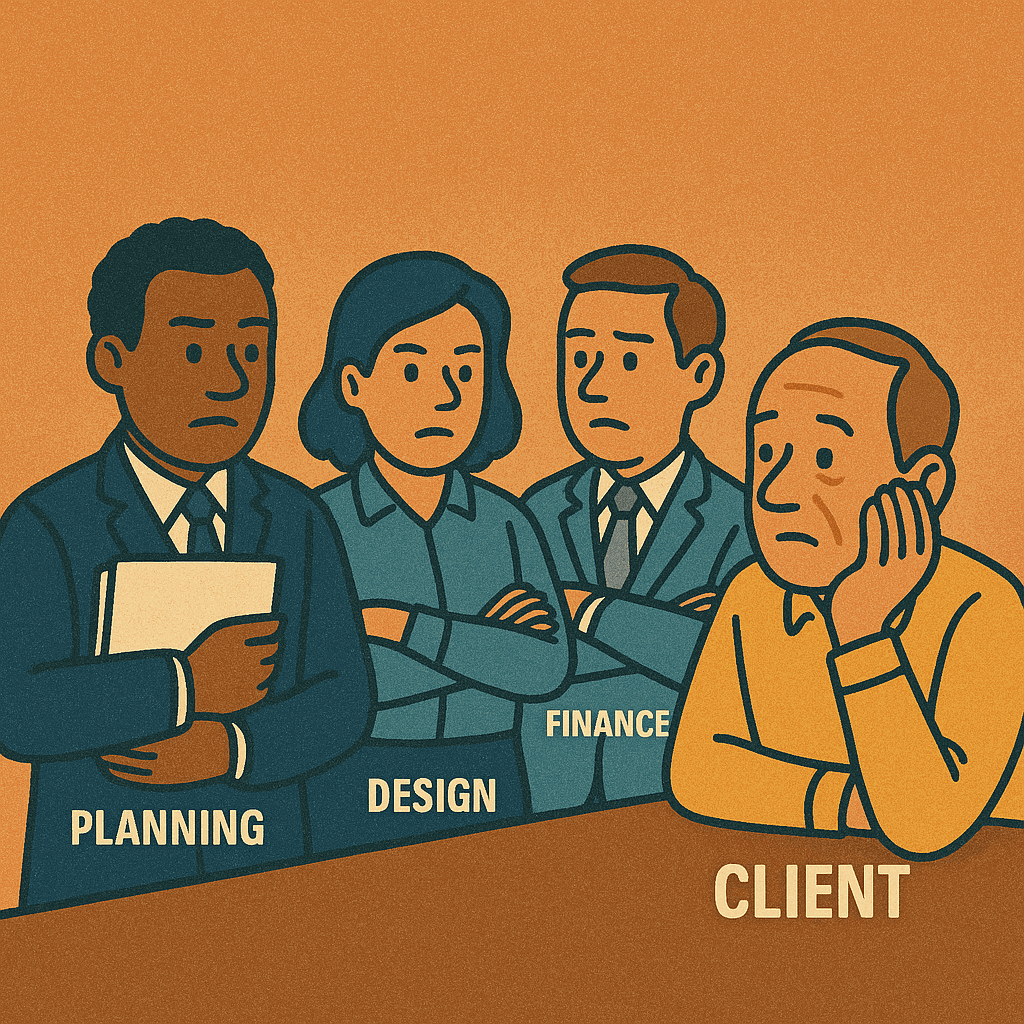
The classic chain of delay:
Planning waits for zoning.
Design waits for planning.
Finance waits for design.
The client waits for everyone.
Coordination creates friction long before detailed design ever starts.
Zenerate's resolution:
Real-time feasibility places all early-stage metrics—zoning inputs, yield, area, test-fit options—in a single shared environment. Teams stay synchronized instead of chasing missing data.
6. Perfection Pride
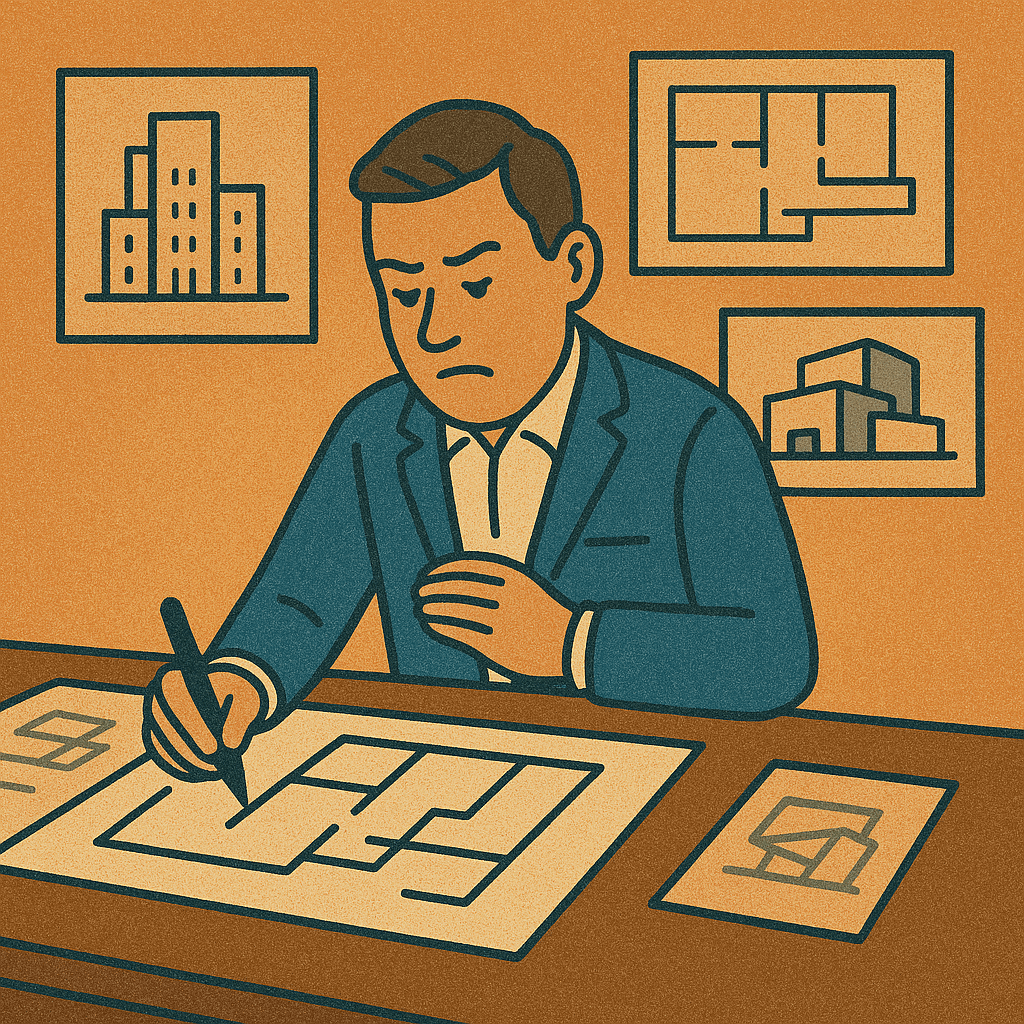
Teams instinctively over-polish early feasibility, preparing drawings and layouts far beyond what the client actually needs at this stage.
The irony: decisions often change immediately afterward, forcing the entire workflow to restart.
Zenerate's resolution:
Rapid feasibility encourages clarity and direction first—refinement later, once decisions are validated.
7. Panic Procrastination
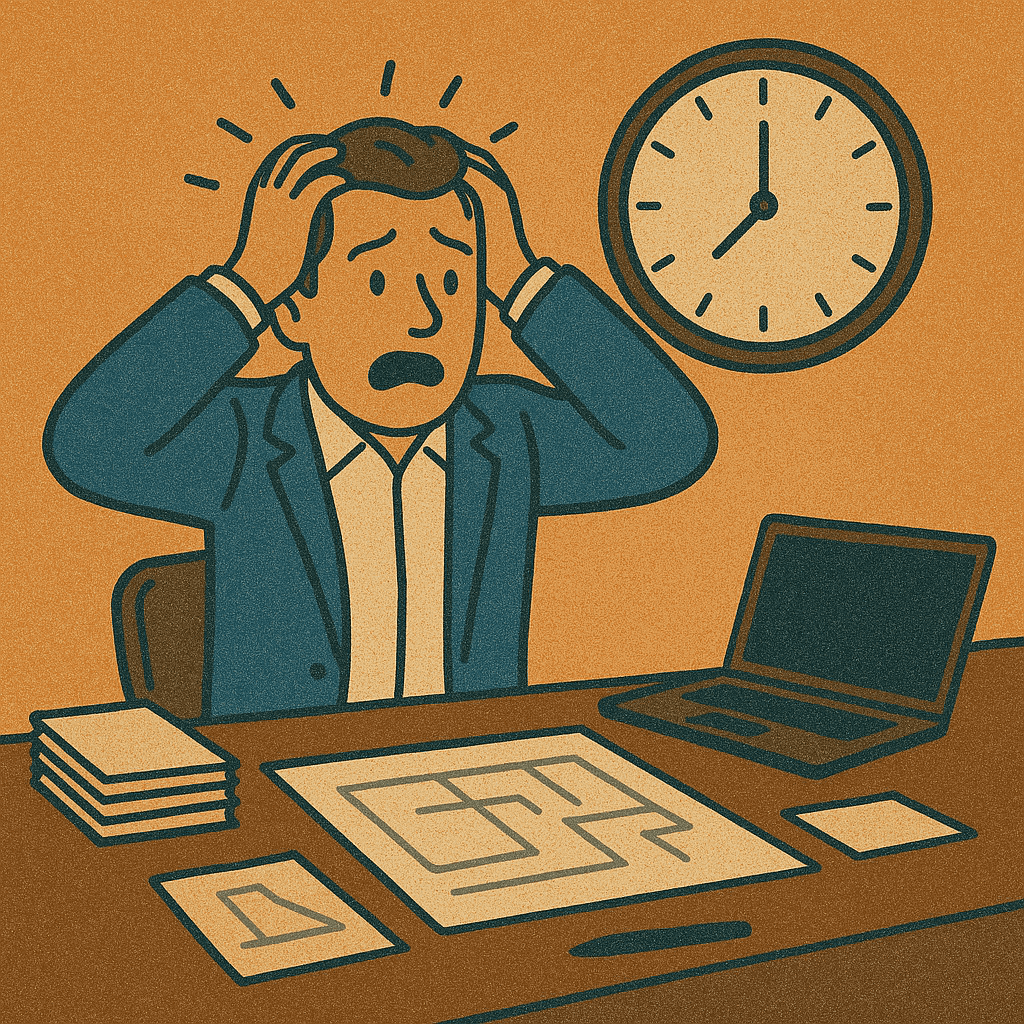
A client meeting is scheduled for later in the afternoon.
The feasibility study, test fit, or site comparison is not ready.
Panic overtakes the process, and the team works in emergency mode.
Zenerate's resolution:
With instantaneous recalculations and variations, "last-minute changes" become manageable rather than destabilizing.
Why These Sins Persist
Architects and developers don't fall into these traps because of poor judgment, but because early-stage design has always been slow, manual, and poorly supported by tools.
Most existing software focuses on detailed design, not feasibility. As a result, early-stage work remains one of the most inefficient phases of a development cycle.
How AI Changes Early-Stage Design for Good
Real-time feasibility and generative layout tools eliminate the friction that causes delays:
• Inputs become constraints, removing ambiguity
• Variations generate instantly
• Zoning and yield updates happen live
• Options become data-driven, not guess-driven
• Teams align on the same information without back-and-forth
This is how early-stage design moves from reactive to strategic.
The Bottom Line
The seven deadly sins will always exist, but with the right tools, teams don't have to suffer from them.
Real-time feasibility transforms early-stage workflows from slow, manual, and error-prone into fast, transparent, and collaborative.
Speed isn't just convenience—it's opportunity.
Explore What Zenerate Can Do
Ready to accelerate your feasibility studies? Book a demo with us today and get a free trial to see how fast site planning can be done.
Book a demo + Get a Free Trial